Greetings, my fellow Reticulum enthusiats,
Back in late 2025, when I learned about RNS, I was still pretty much fumbling around with other popular LoRa mesh networks, but I quickly realized the limitations of the popular LoRa board designs. One thing I always felt missing from them was Ethernet/PoE support.
A few PoE-capable designs popped-up on social media but all my inquiries were met with "sorry, I am planning on going commercial" or "it's just for show". So I set out on making my own free/open-source design of making a small outdoor PoE-powered and Ethernet-capable LoRa node.
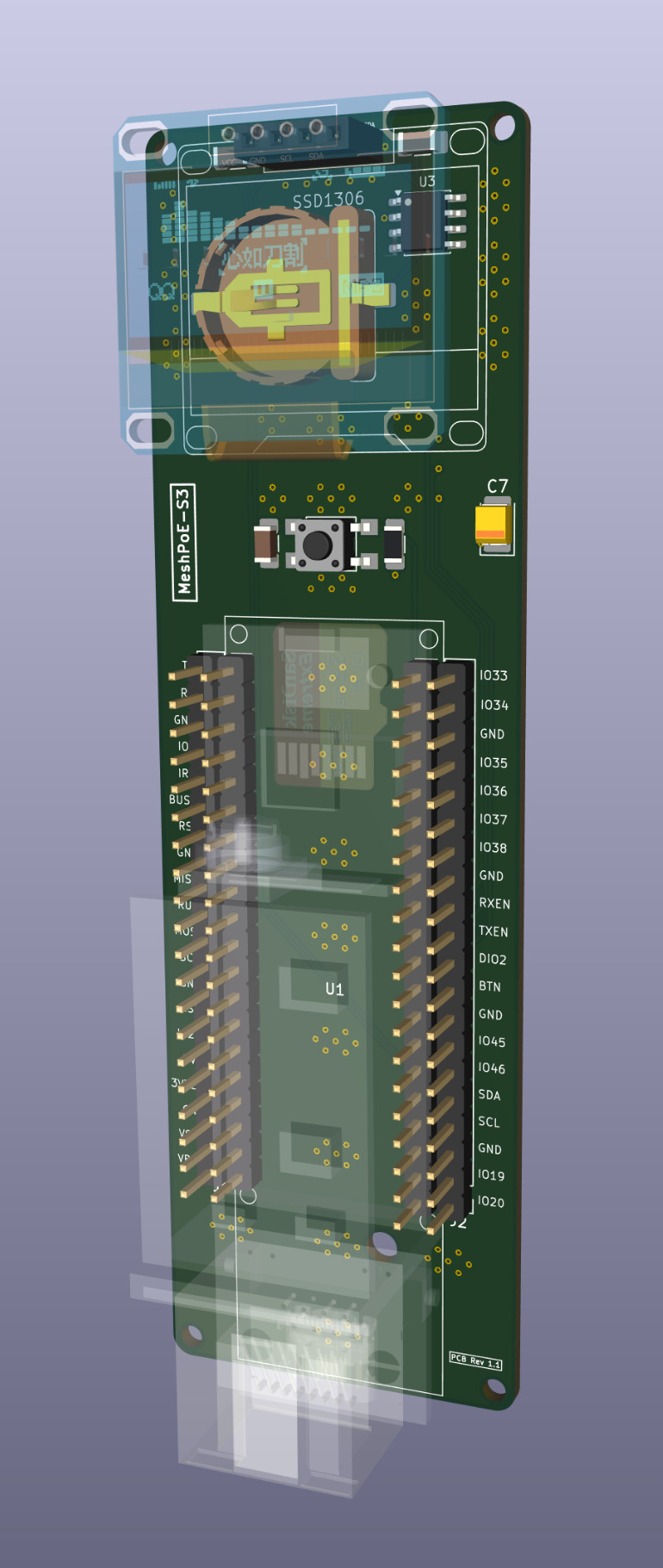
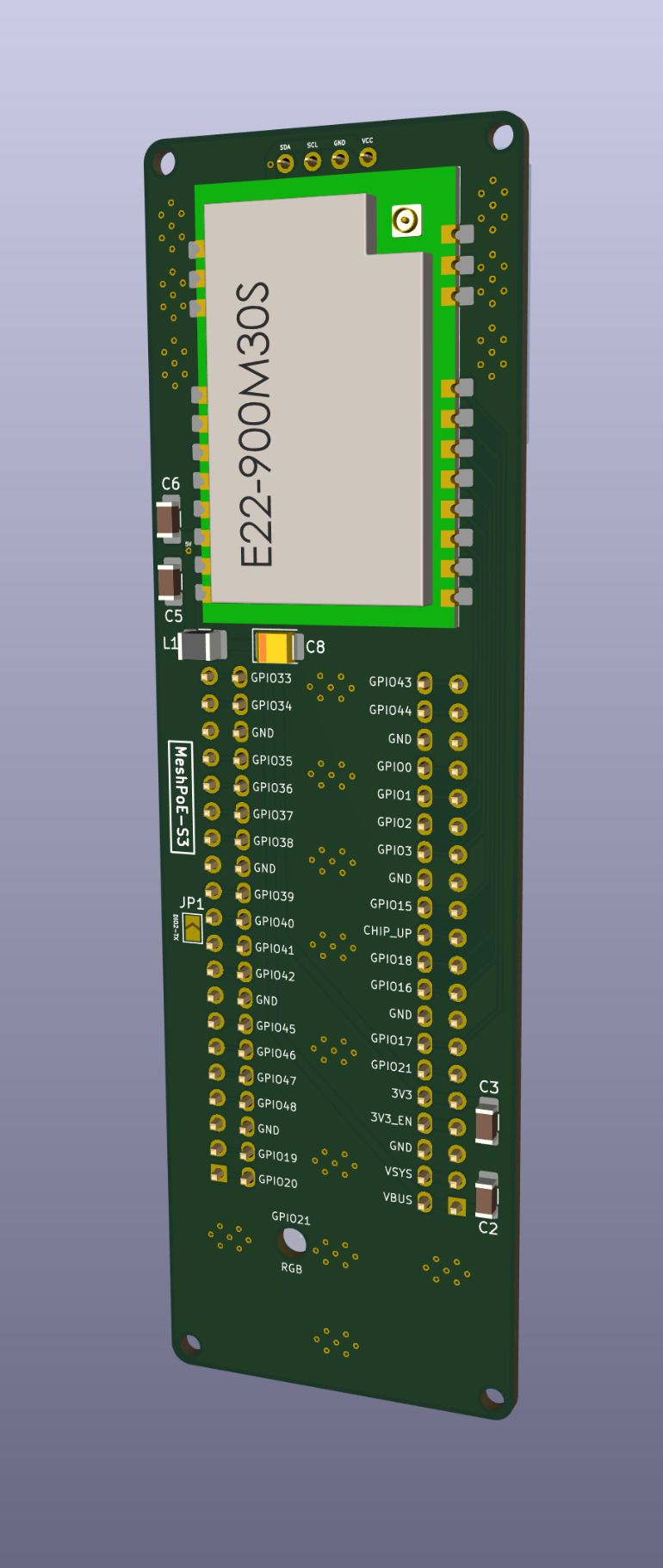
The overall design goals were:
- Easy to build even by a relatively inexperienced person
- Simple electronics design with as few components as possible
- Uses off-the-shelf widely available eByte LoRa modules
- Outdoor weather-proof mounting in a compact form-factor
- Fully RNodeInterface compatible
- Ethernet support with OTA firmware updates
It took quite a while to get right, mainly because I am not an electronics engineer and neither am I a developer.
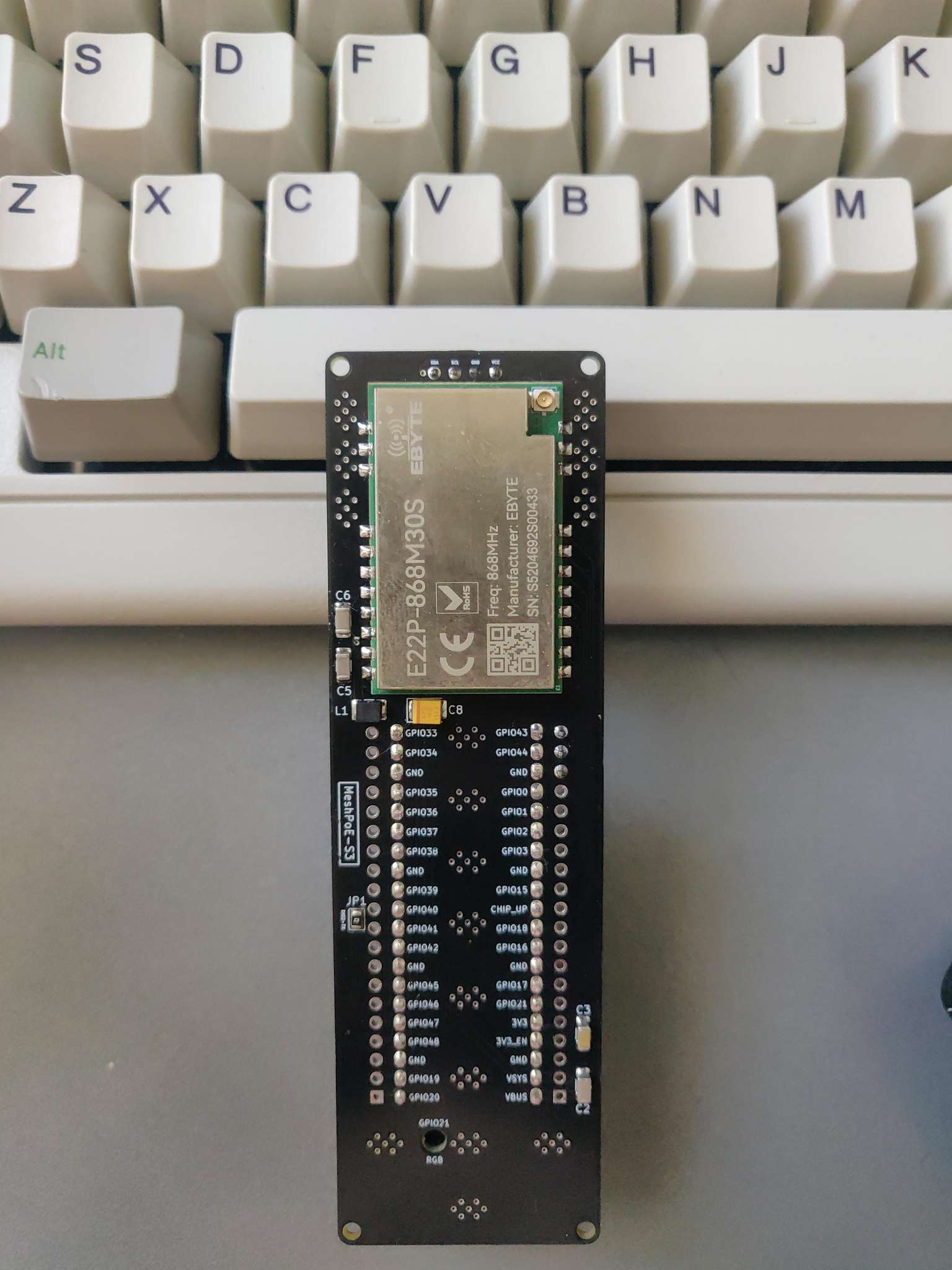
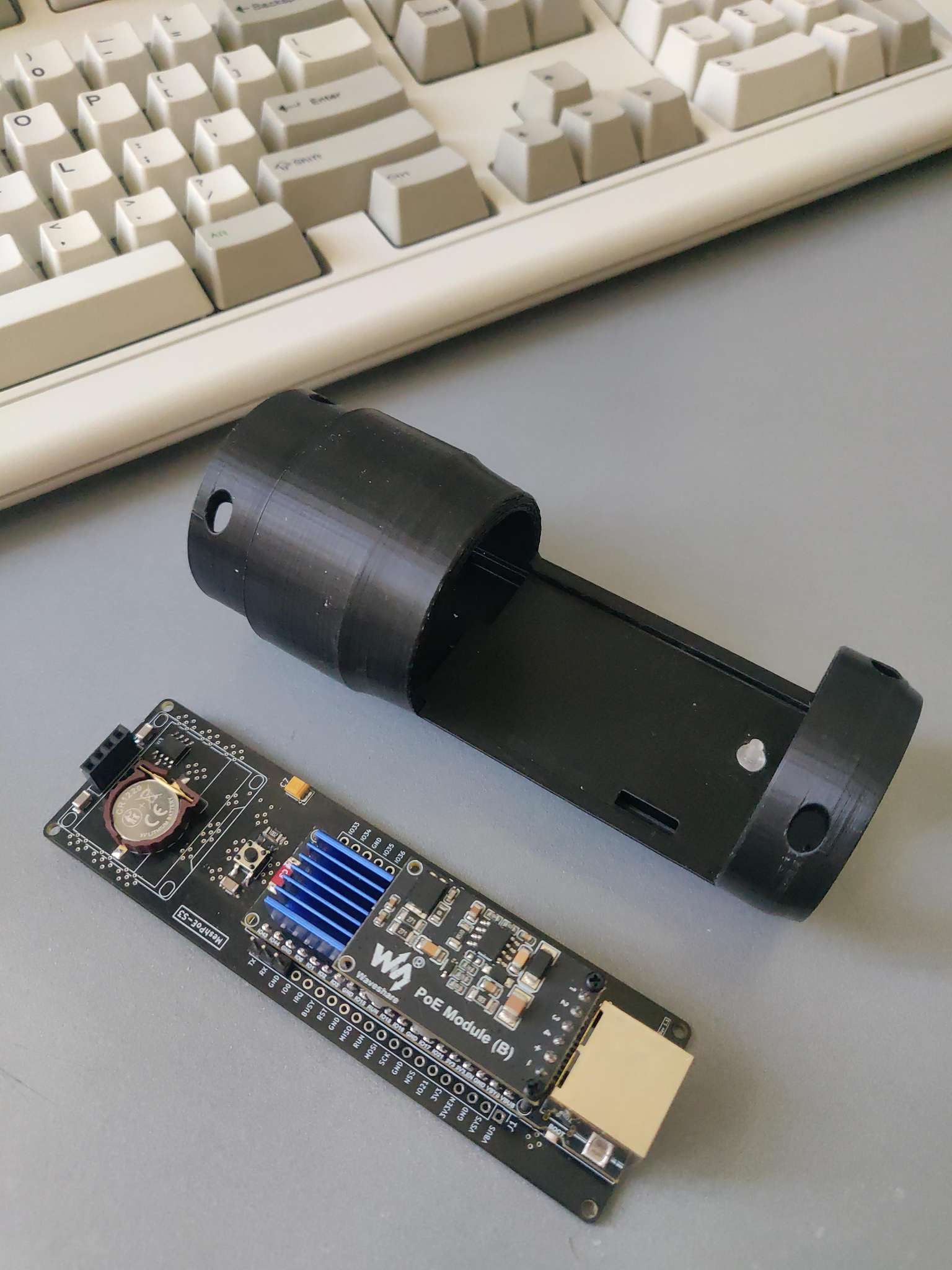
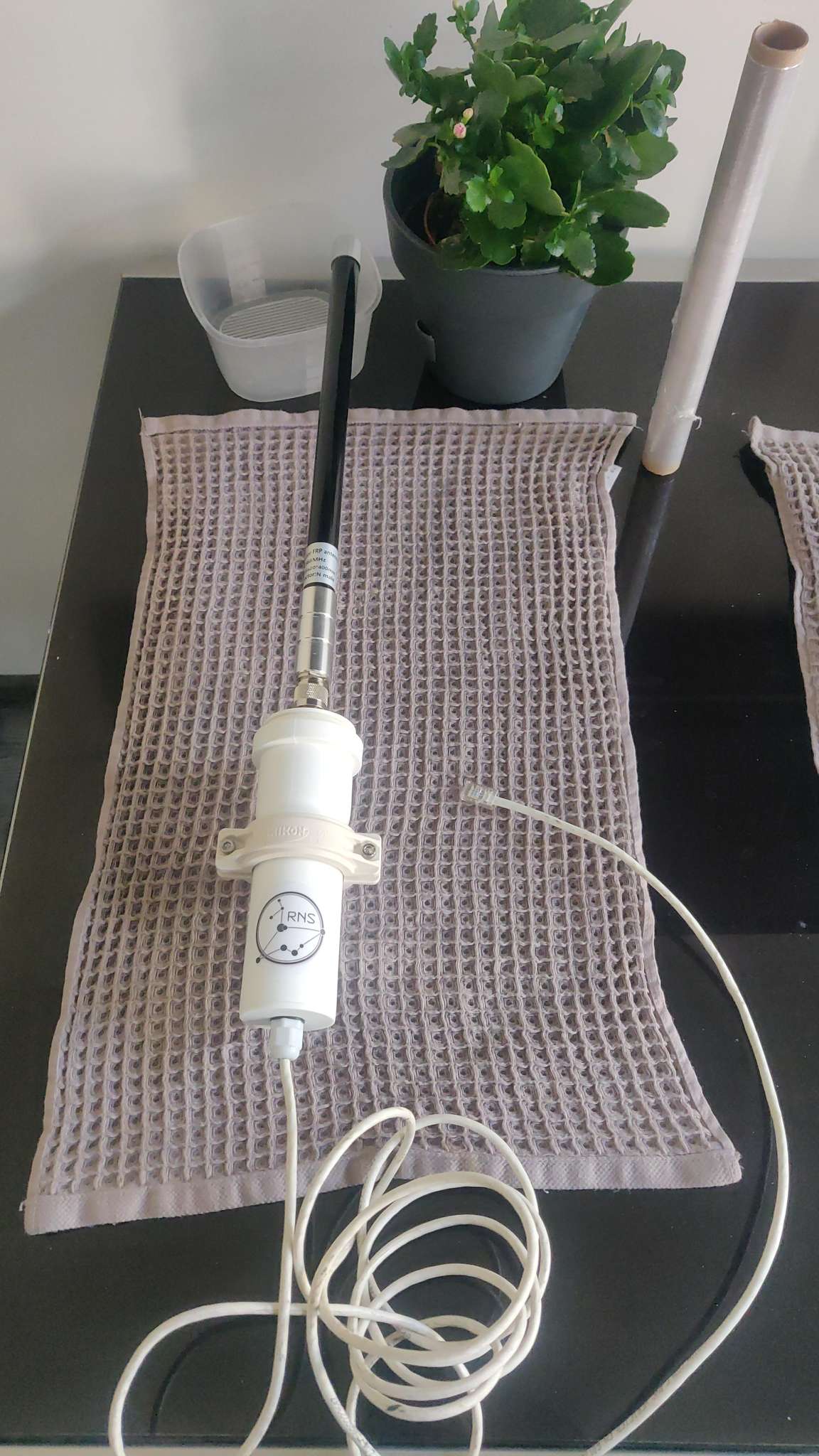
But after more than 7 months of work, it's somewhat safe to say I have MeshPoE-S3 working and serving my local district/area. The MeshPoE-S3 is using an eByte E22P-868M30S 30dBm LoRa module (but still compatible with E22-family of modules for different radio bands) that provides excellent performance for RNS over LoRa and runs on an off-the-shelf WaveShare ESP32-S3-POE-ETH devboard, which has 8Mb of PSRAM and can happily run a microReticulum Transport as well. It also has an optional RTC.
For casing and environment protection it uses a standard 50mm PVC pipe with a 3D-printed inlay that the board inserts into and the inlay snugly plugs into the pipe. The inlay is optional but nice to have. It has a standard 4-pin 2.54mm header to connect either an I2C OLED display for initial setup, or an optional environment sensor.
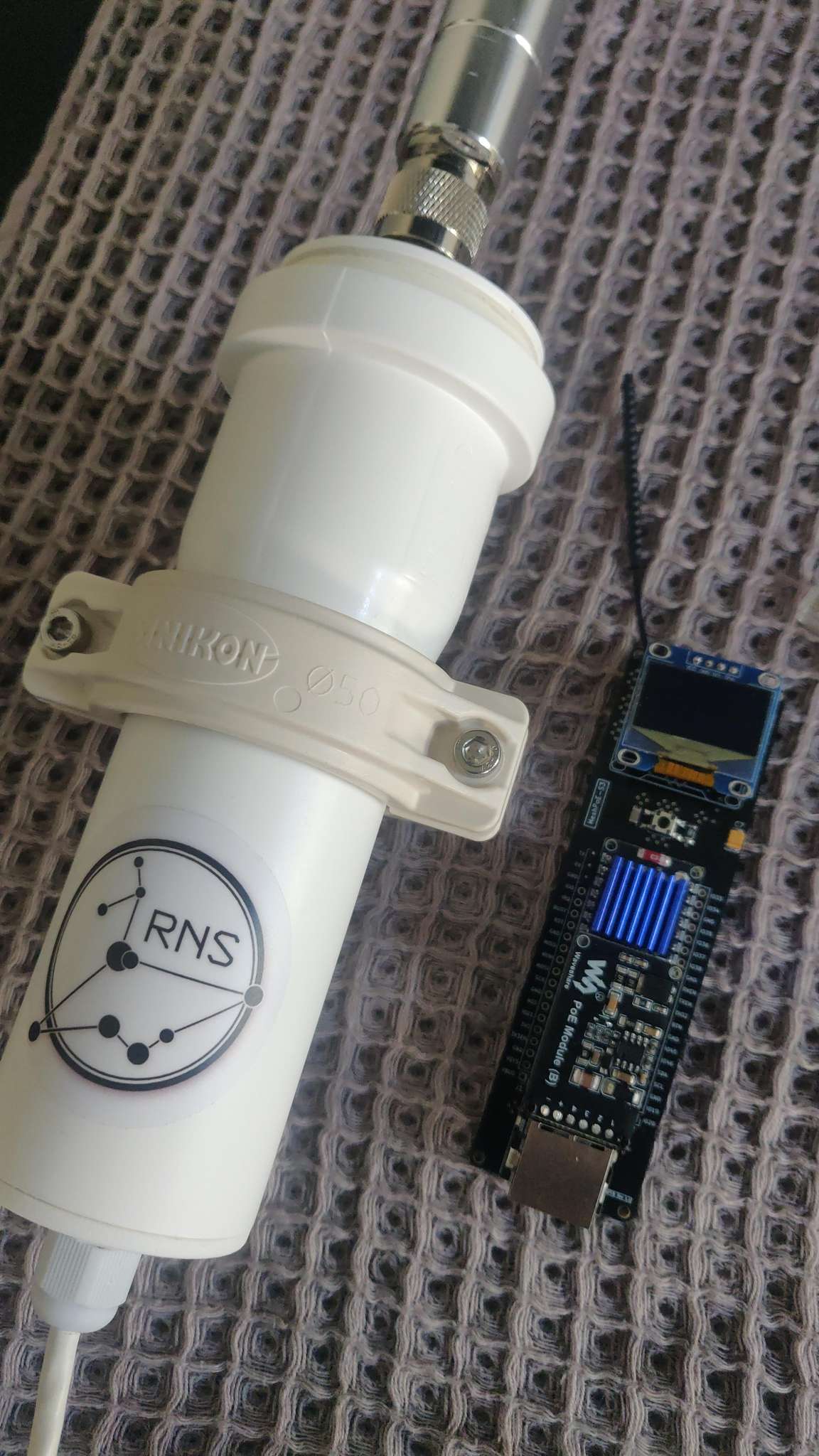
Overall, I am happy with the design and glad to share it.
It has all the schematics, Gerber files for fabrication and a KiCad project if you're interested in adapting it for your needs.
https://git.rns.moscow/deuxyeux/MeshPoE-S3
It is also available via rngit at ff520eb88d6454cc6d0d20b3a217b6d3:/page/repo.mu`g=public|r=MeshPoE-S3
P.S.
I want to extend my heartfelt thanks to Bill from aetherlab for his continued support, advice and help with the project. It wouldn't have been possible without him. Also, I'd like to express gratitude to Mark Qvist for his creation of Reticulum Network Stack and a special thanks to Zenith for his RNS community work.